
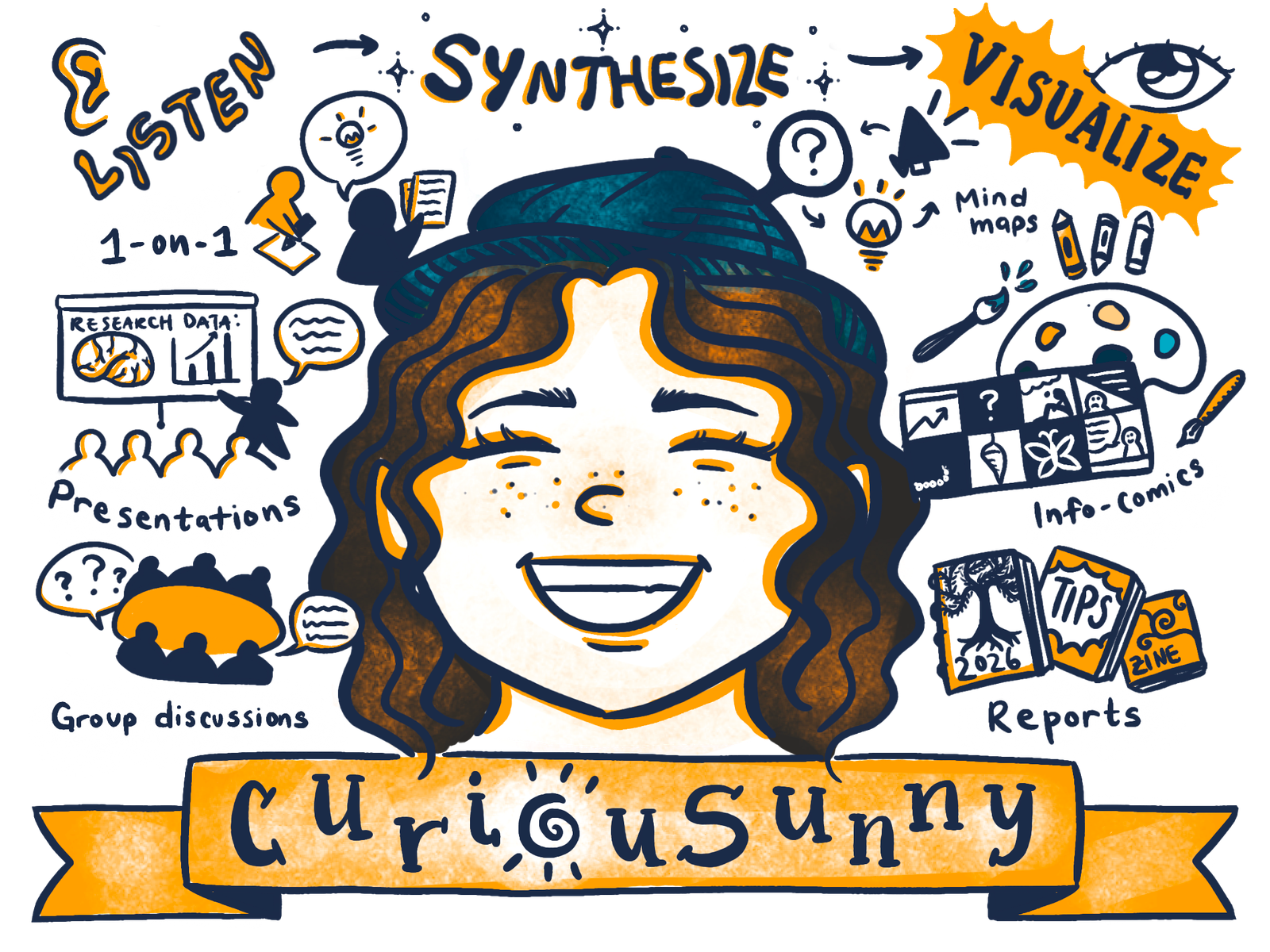
Arts-based knowledge sharing rooted in science and community


Dear researchers and experts,
You've spent years understanding something most people have never had the chance to think about. Then you get ten minutes on a stage, a one-page summary, or a slide deck, and you're asked to make it stick.
That's where I come in.
I'm a multimedia designer and illustrator, trained in health science and worked as a researcher. I know how to read the evidence and ask the right questions. I listen to how you explain your work, find the core idea, and draw it so people can understand it at a glance.
Below, you'll find the ways we can work together, a gallery of past projects, and what clients have said about the process. If you have an idea that deserves to travel beyond the room where it was shared, I'd love to hear it.
Sunny Yimeng Dong, BHSc
Visual Alchemist

Visual Mirror
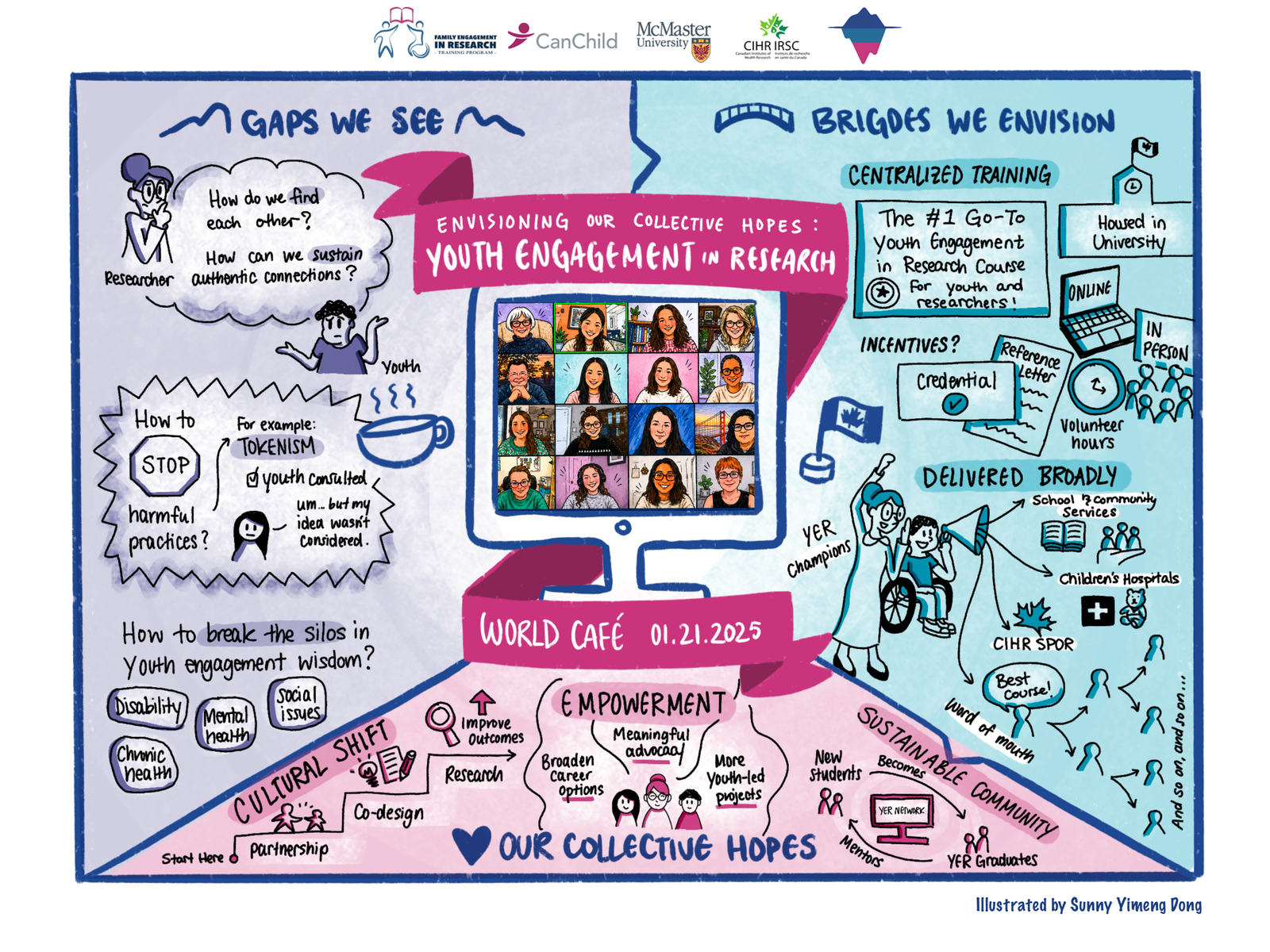
Graphic recording for your event or your idea
I listen and draw what I hear, so you and your audience can see your ideas reflected back clearly. Invite me to your conference, keynote, panel or workshop, or book a one-on-one session to find the visual metaphor for an idea you can't quite explain.

Workshop Synthesis and Illustration
Group conversations to shared mind map
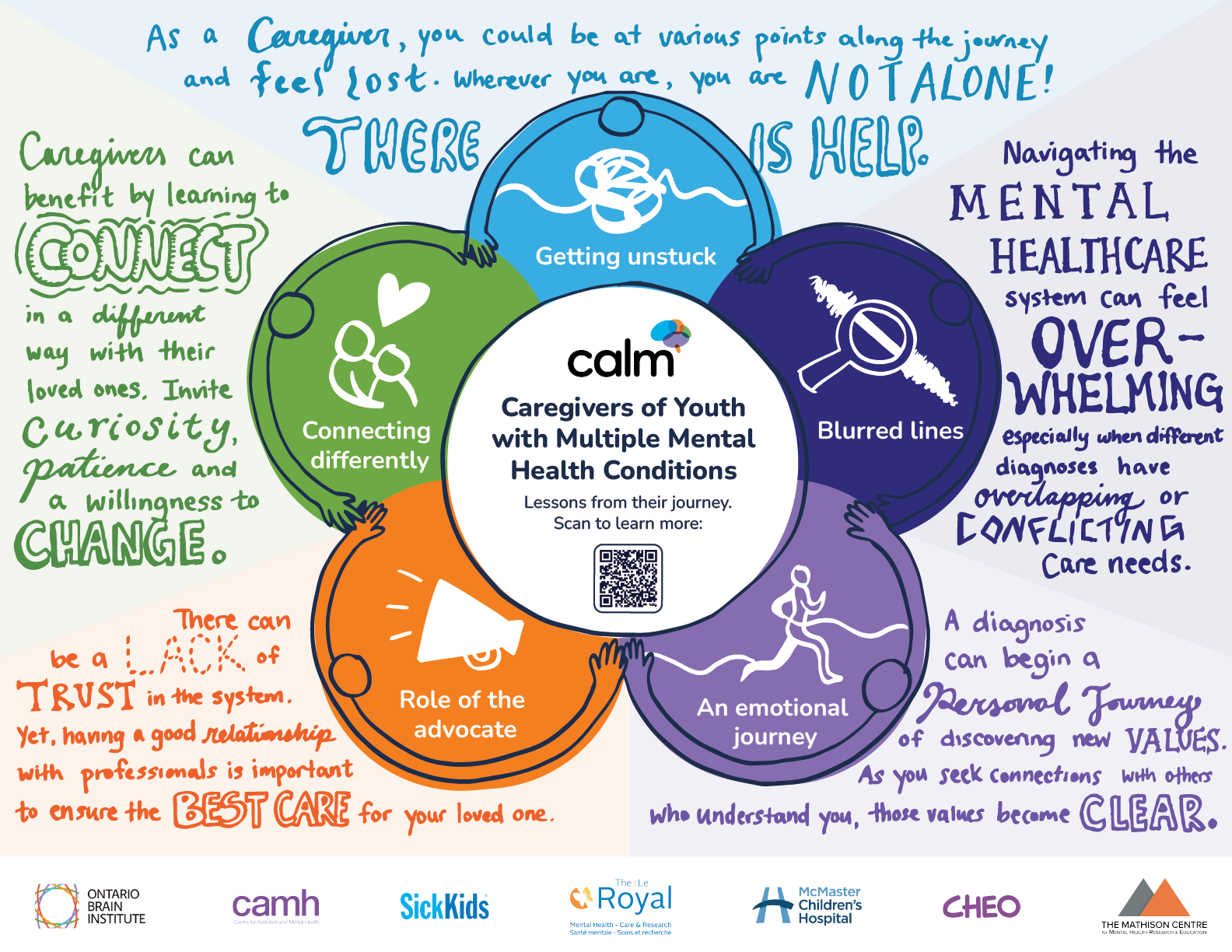
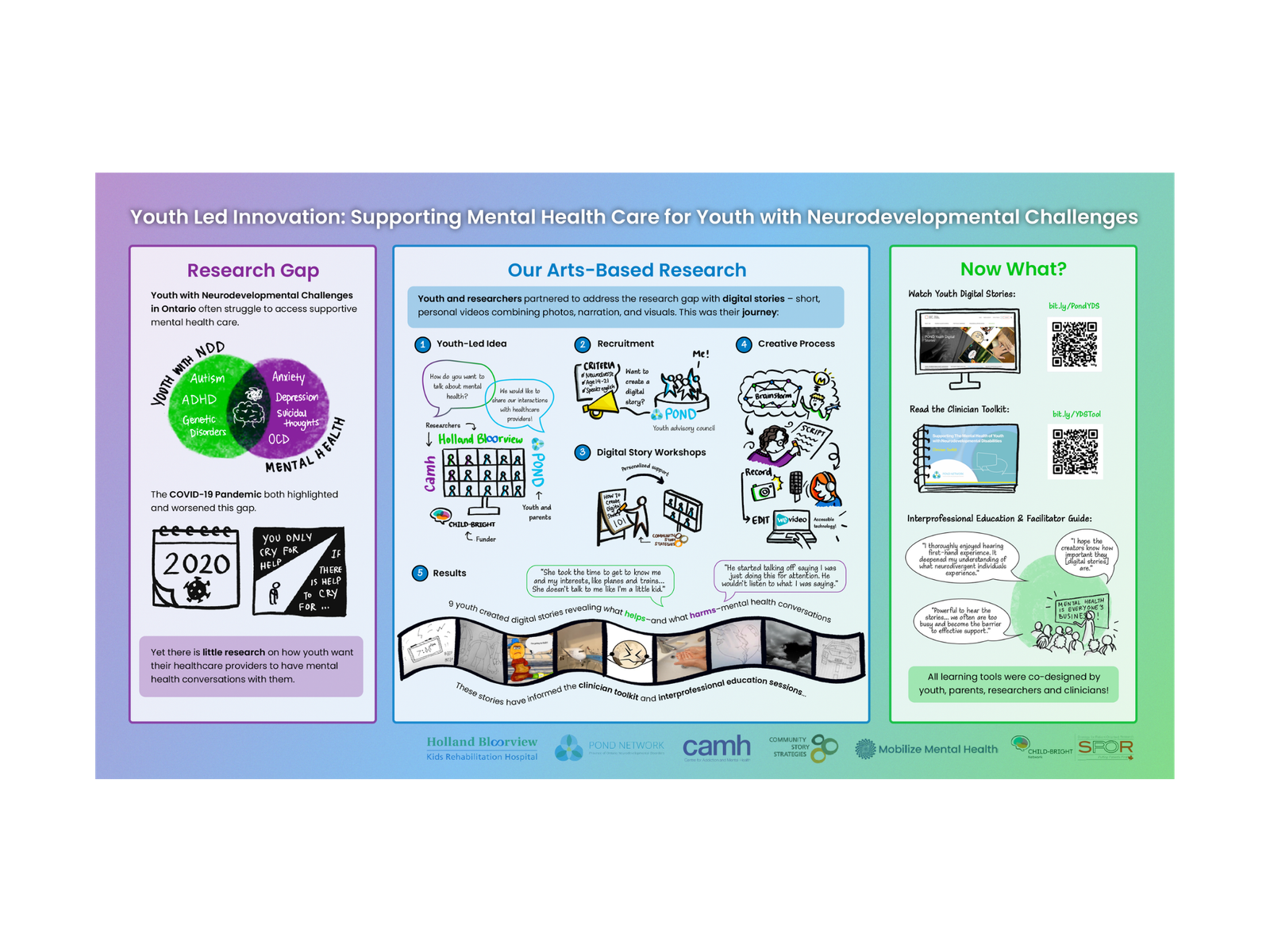
When many voices contribute, the ideas can end up scattered across sticky notes, breakout rooms and notebooks. I gather what was said, find the common threads, and illustrate them as a single visual that participants can recognize themselves in. Your team gets something to act on, and participants see that they were heard.

Knowledge Sharing Design
Co-designed concepts built into multimedia interactive resources
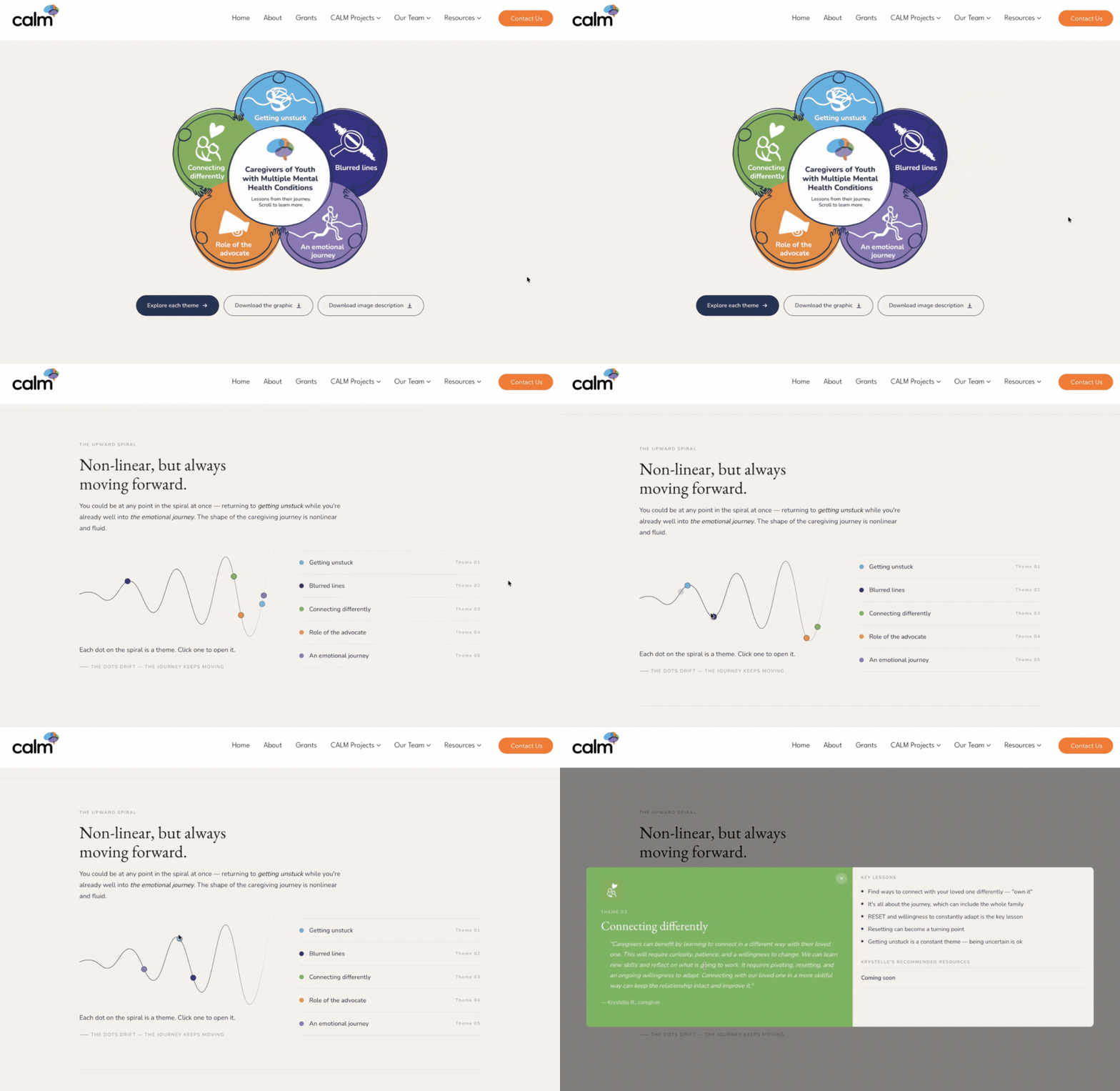
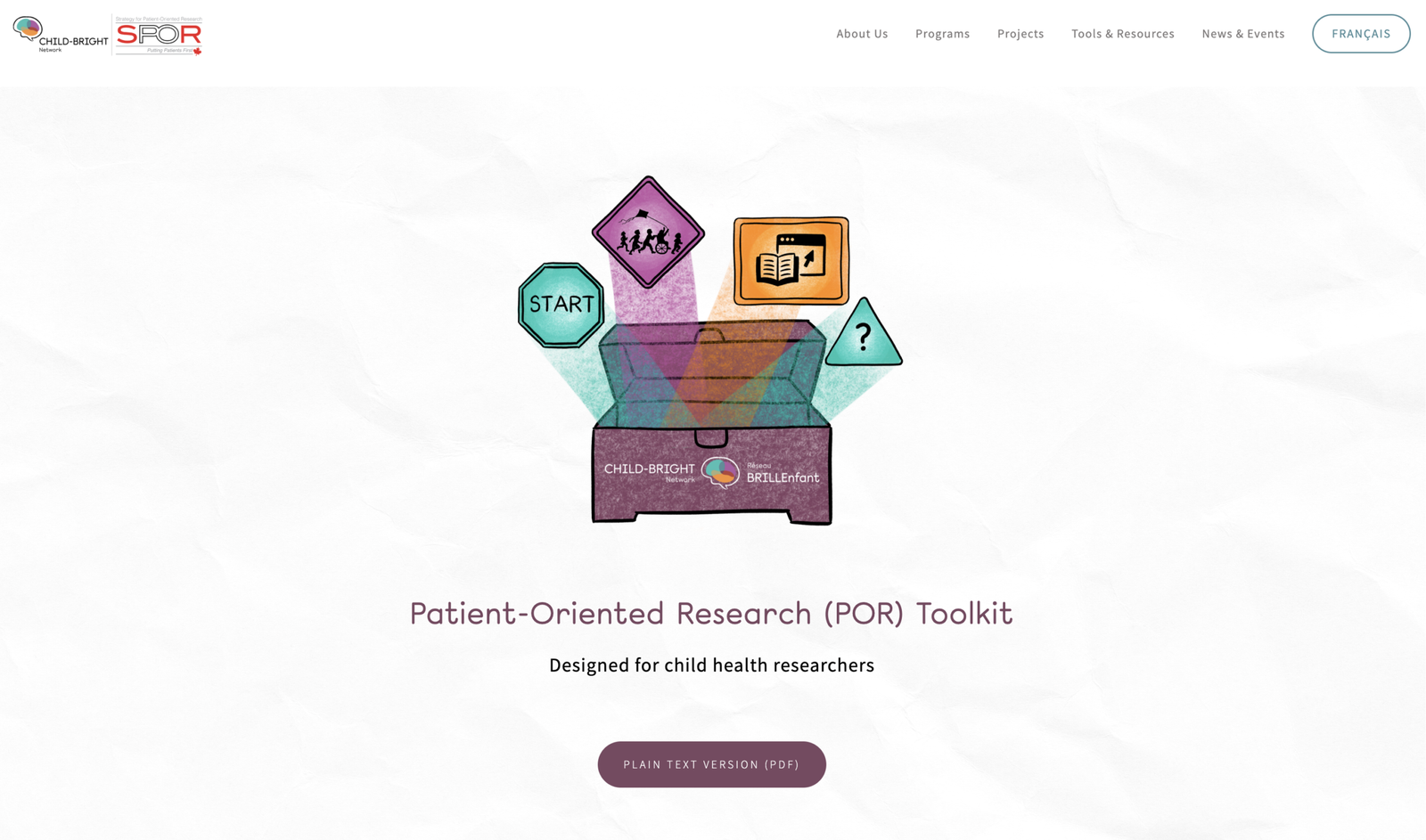
Some ideas need to be explored, not just viewed. I work with you and end users to shape a concept together. I sketch it by hand, then build it into a multimedia web resource. The result is a tool people can use, grounded in their own experience.
Share a few details and I'll follow up, often with a link to a free 30-minute call
Frequently Asked Questions
What does the co-creative process look like?
Every project moves through three phases:
Envision: You fill out the intake form. We talk through your goals, audience and where the work will live. I then propose a scope and quote, and we shape it together until it feels right for both of us.
Capture: I listen, synthesize and sketch, whether that's during a talk, after a workshop, or in co-design sessions with community members. You see an early draft while it's still easy to change, then a refined version built to WCAG accessibility standards.
Share: You receive files ready for print, web or presentation, with alt text included. For interactive tools, we launch together.
You're involved at every stage, so the final piece reflects the people it represents.
How long does a project take?
Timelines depend on the scope, but here's a general guide:
Visual Mirror: Drawing happens during the event or in a 1-on-1 session. Your finished visual summary arrives within 1–2 weeks afterward.
Workshop Synthesis and Illustration: About 2–3 weeks from the session, data synthesis to the final visual, including one round of feedback.
Knowledge Sharing Design: Usually 6–12 weeks, since co-design sessions, sketching, and building an comprehensive resource take time to do well.
For events, booking 4–6 weeks ahead gives us room to prepare. If you're working toward a deadline, like a conference, a funder report or a grant submission, let me know early and we'll plan backward from it.
Rush timelines are sometimes possible, depending on my schedule. Projects needed in less than half the usual time carry a 50% rush fee, included upfront in your quote.
How do you price your work?
I quote each project individually, because a one-page event summary and a co-designed knowledge tool call for different amounts of expertise, collaboration and care.
I approach pricing as a shared agreement, not a negotiation. After you tell me about your project, I'll send a clear quote covering what's included, how many rounds of revisions, the timeline, and the deliverables. If it doesn't sit right with you, tell me. We can adjust the scope, the format or the timing until we reach something that feels like a genuine yes for both of us.
Good work comes from win-win agreements!
Do you use AI in your work?
Yes, in specific parts of my process, and I'm always open about where.
- Brainstorming: I sometimes use AI to explore ideas, metaphors, or ways to structure a concept early on. The final visuals are hand-drawn by me.
- Writing: I sometimes use AI to draft a starting point for written content, like project descriptions, captions and alt texts. I then edit and rewrite it so it's accurate and in my own voice.
- Web design and interactive resources: I use AI tools to help design and code websites and interactive resources. I review, test, and refine everything before it reaches you.
- Your information: I don't enter confidential, unpublished, or identifying information into AI tools without your permission. If your project involves sensitive data, such as participant stories, health information, or unpublished research, we'll agree at the start on what can and can't be shared with AI tools. If you'd prefer I not use AI on your project at all, just let me know.
I see AI as a helpful tool in my studio. The listening, synthesis, and drawing are mine.

Workshop Synthesis and Illustration
Group conversations to shared mind map.


Knowledge Sharing Design
Co-designed concepts built into multimedia interactive resources.
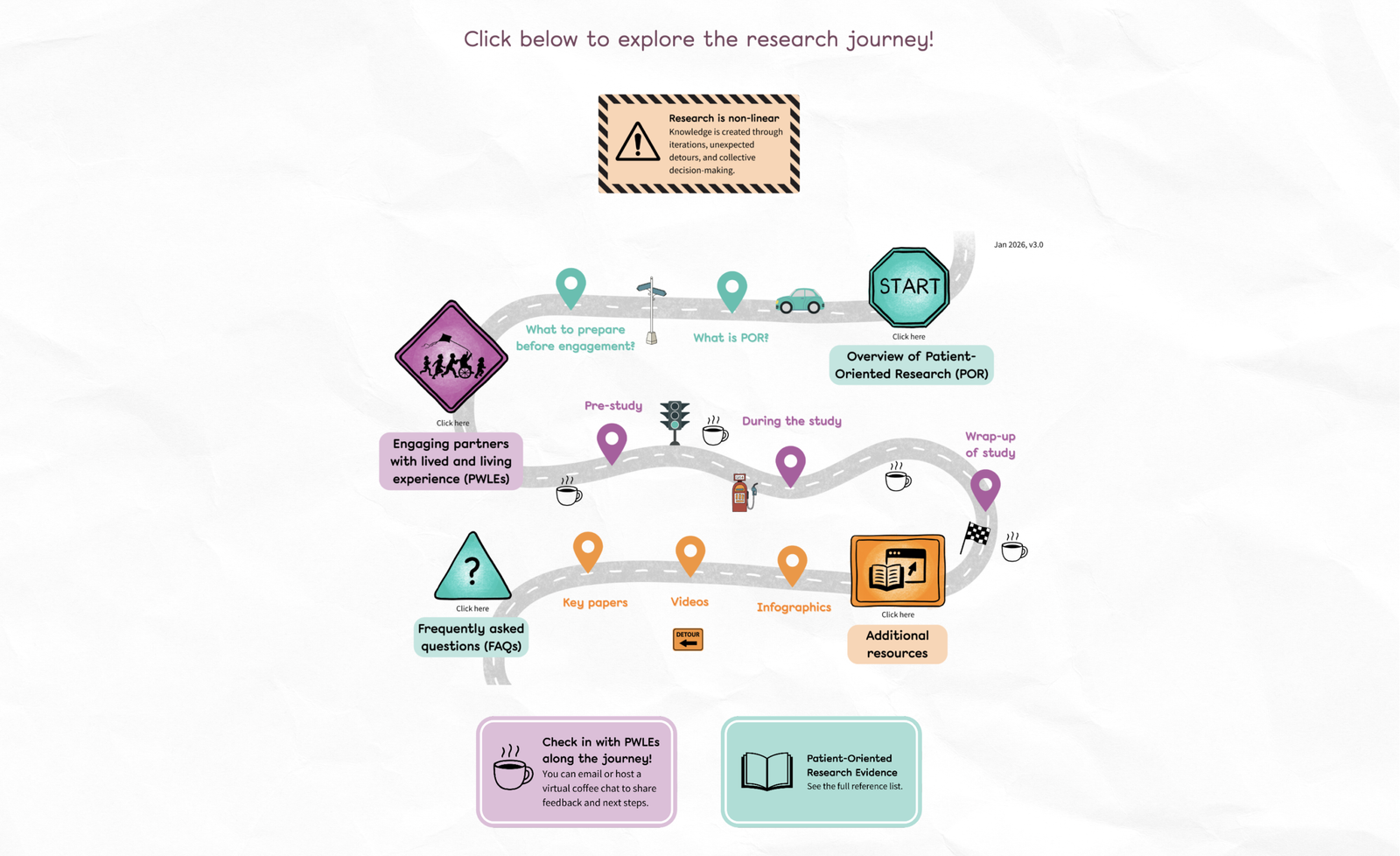
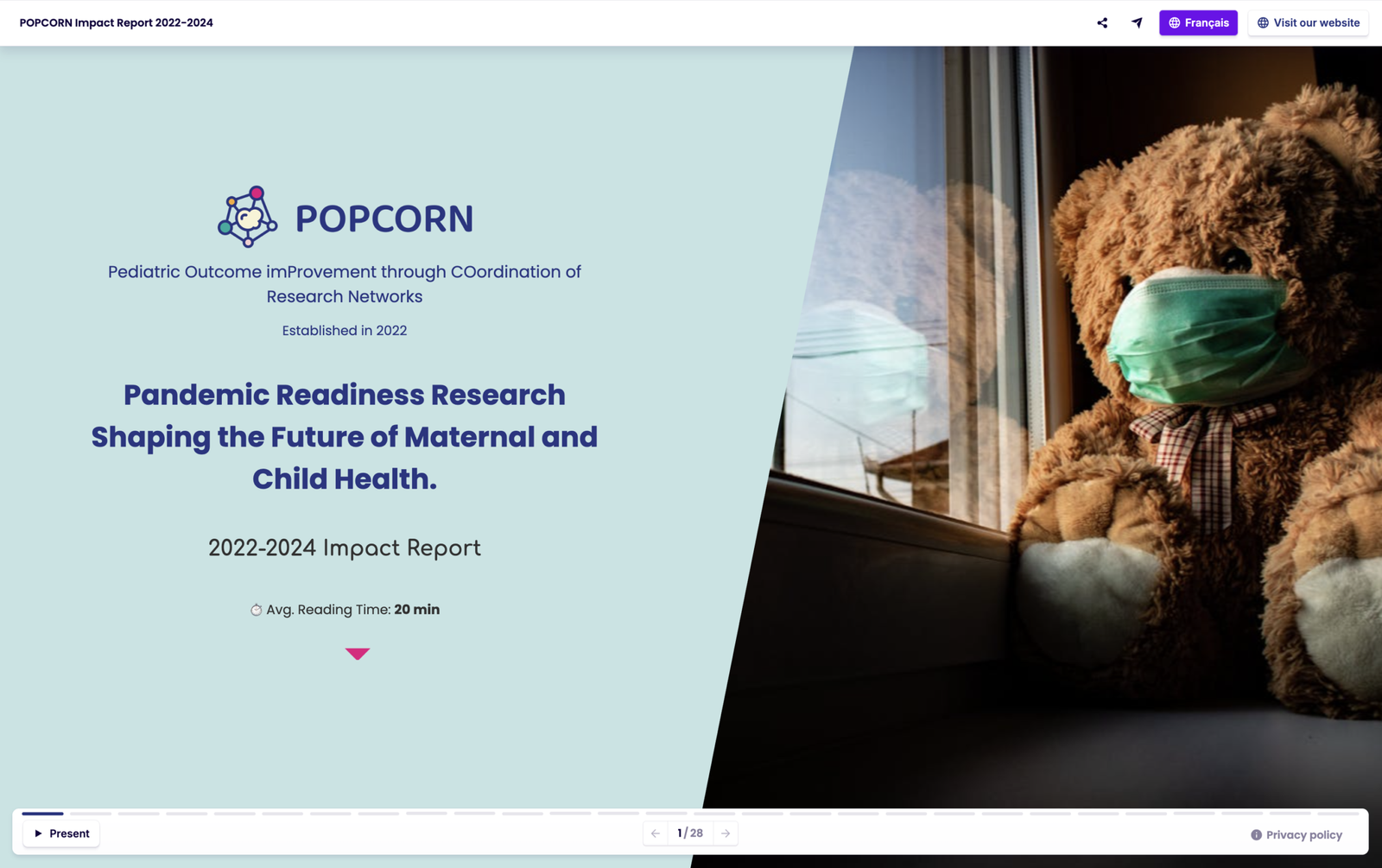
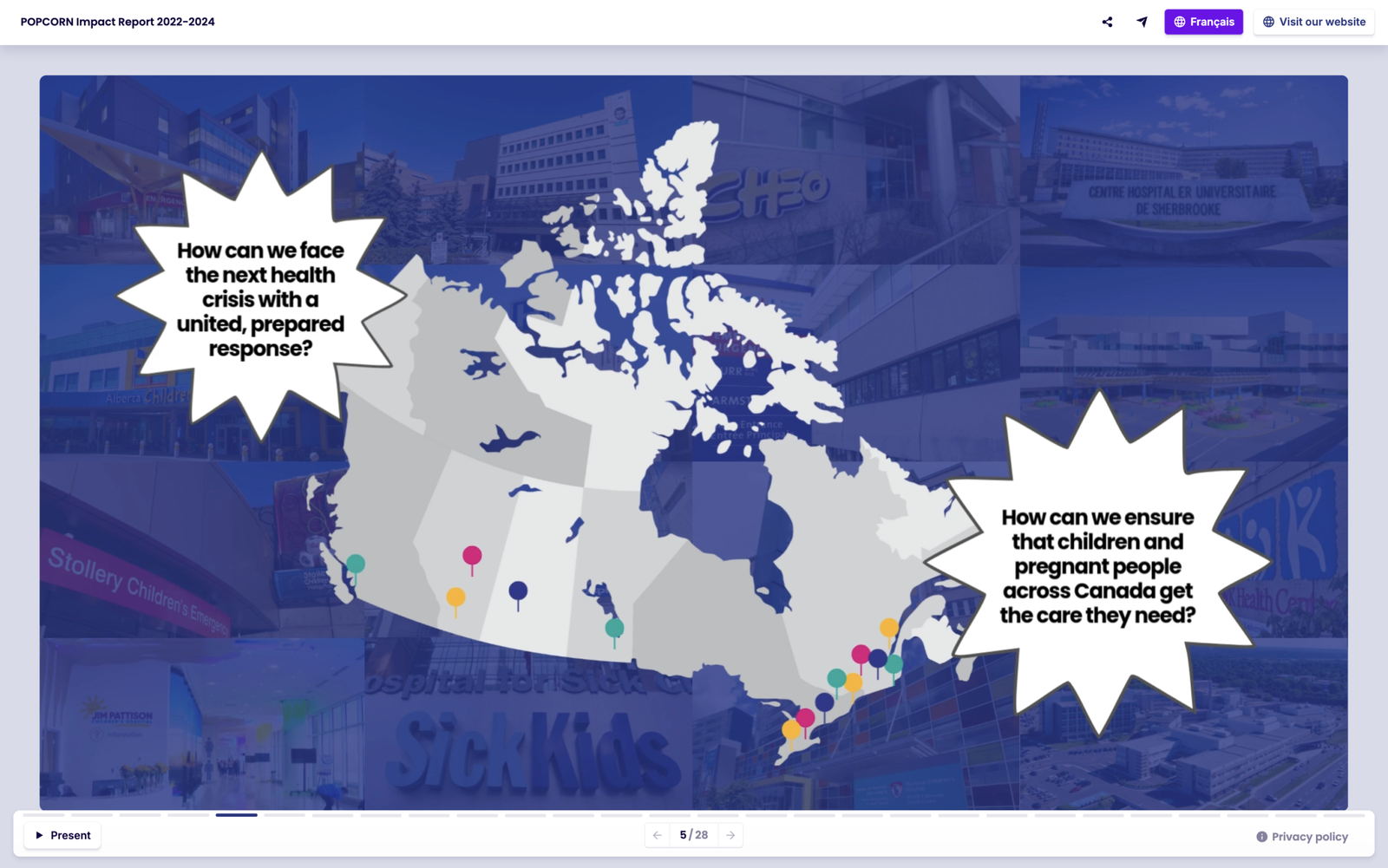
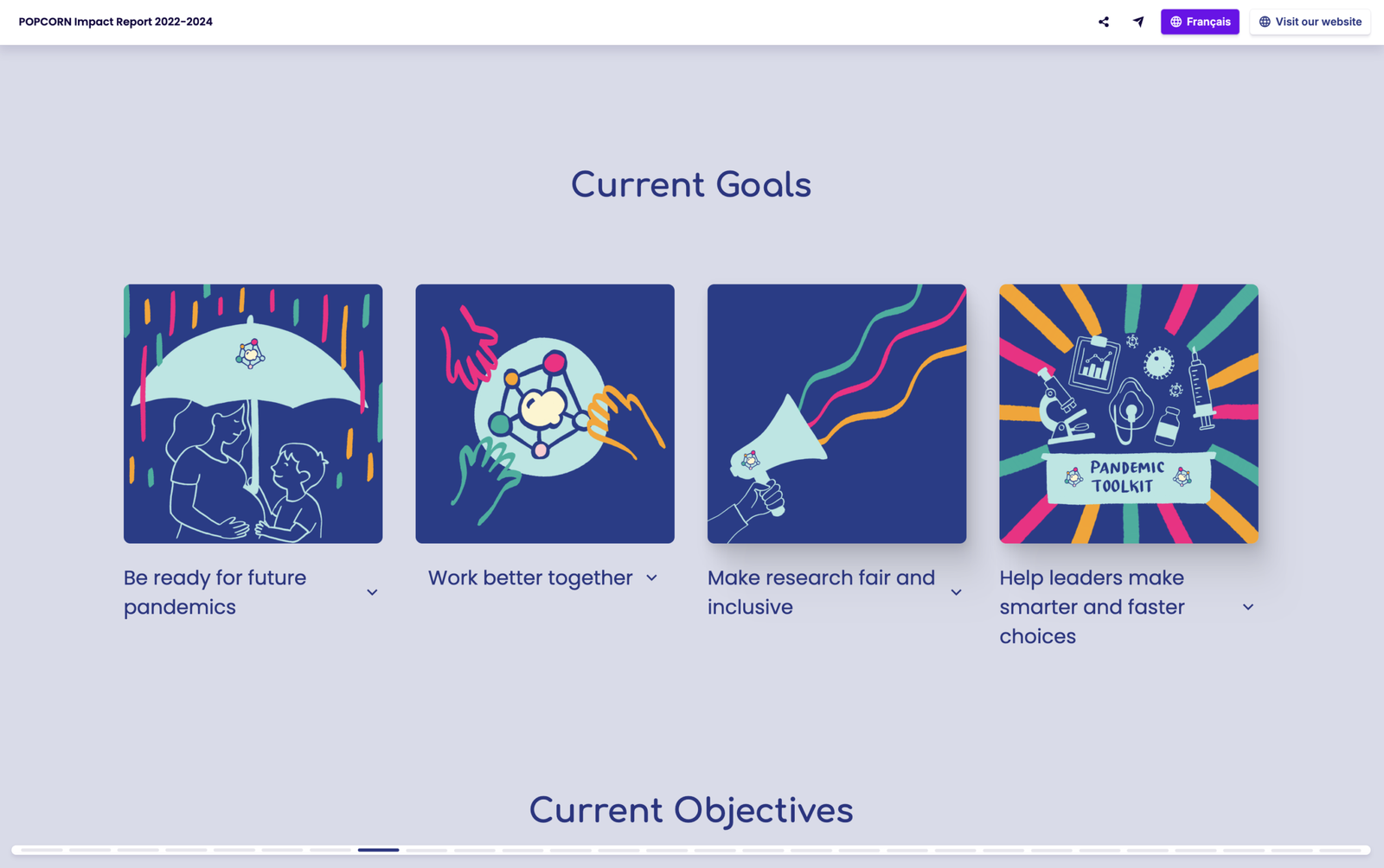
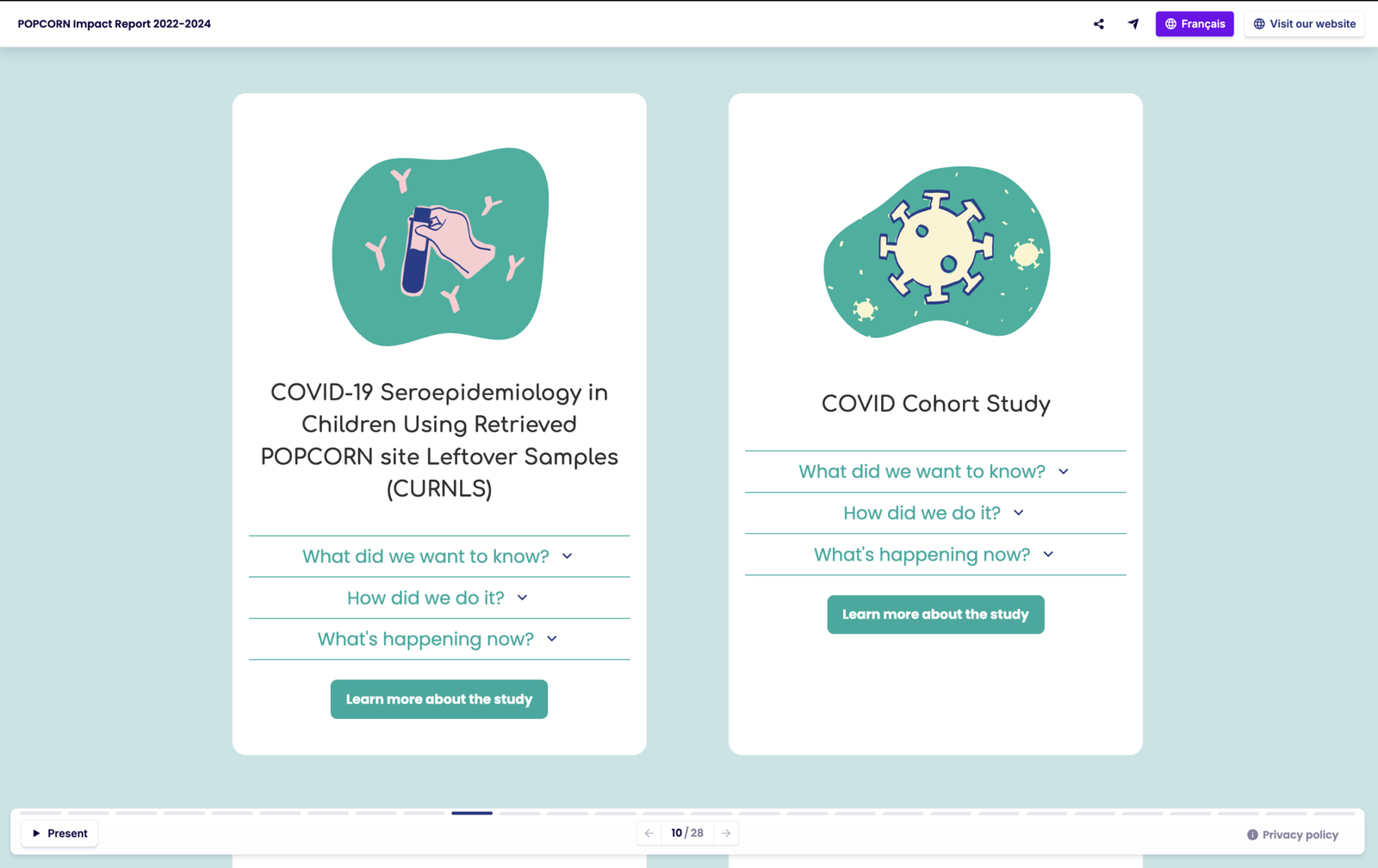
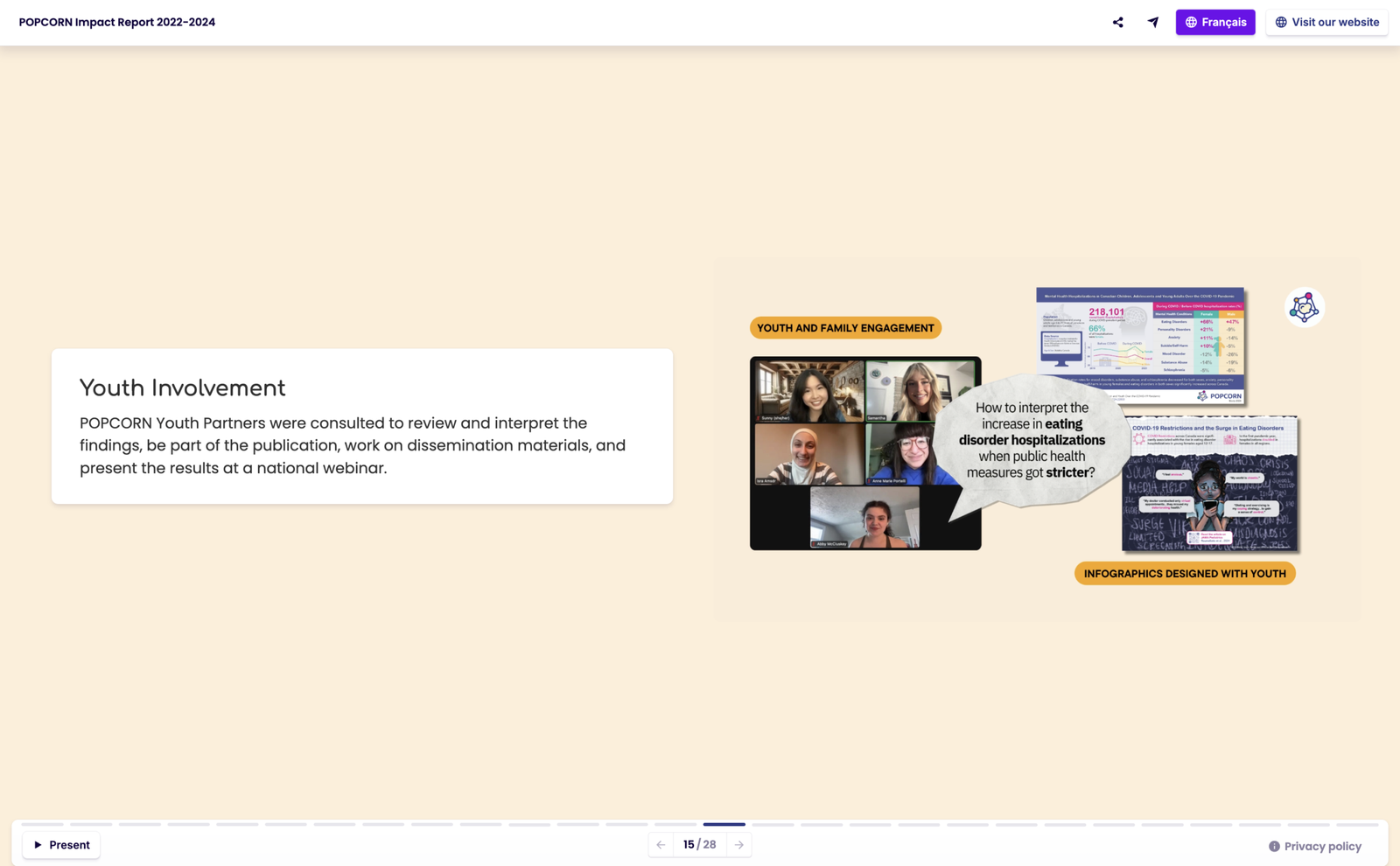
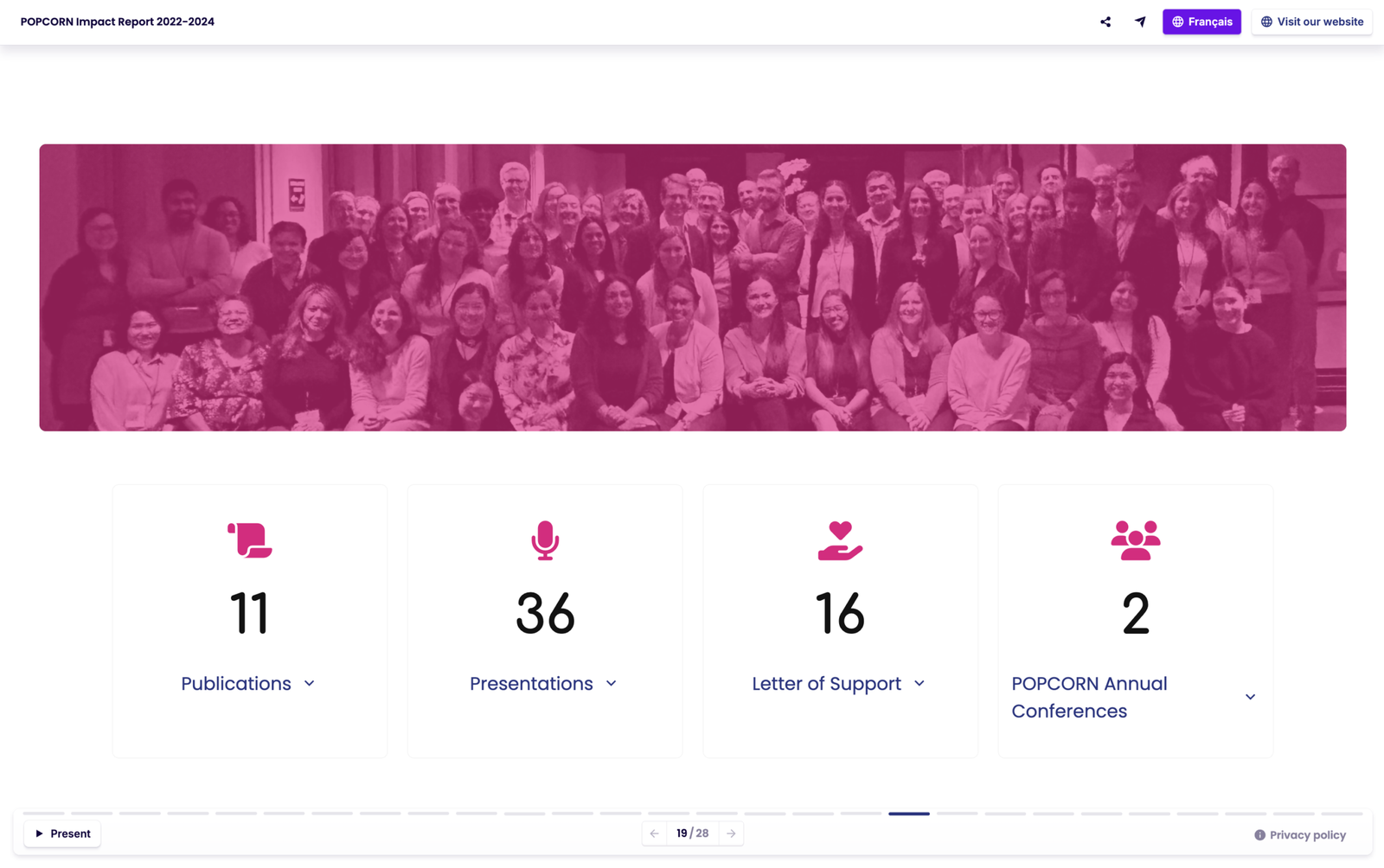

“The collaboration with the Indirect Consequences of COVID-19 study infographics was greatly unexpected for me because I had no idea that you were so talented.
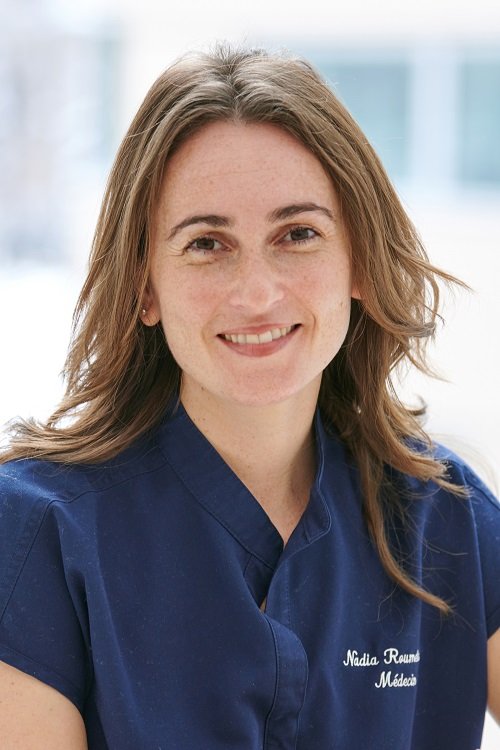
We had a short timeline, gave very little direction, and you just ran with it in a super efficient way. When we got the infographics, we were impressed and had little to change. I think we're probably a highly critical group, and yet, there was very little to say. Thanks!"
– Nadia Roumeliotis, MD, PhD.,
Pediatric Intensivist and Clinician Scientist, CHU Sainte-Justine
"Sunny had the opportunity to expose herself all the way through the research cycle for the Youth Engagement in Research project, from ethics, data collections and synthesizing it to the final publication and presentations.
Clearly Sunny's knowledge translation skills are amazing, and my impression is that this is where her passion lies."
– Jan Willem Gorter, MD, PhD.,
Pediatric Physiatrist and Clinician Scientist, CanChild Centre for Childhood Disability
"Sunny was the engine of the MAPS Canada Special Access Program Tip Sheet. When it landed in our inboxes as a holiday gift two days after Christmas 2023, I don't think I had ever been so pleased about a PDF in my life. She designed it as well as led it, which I am not sure everyone realised at the time. I have pointed people at it more times than I can count, and I still do."
–Michael Bonertz, BSc Pharm, RPh
Registered Pharmacist
Co-developer, MAPS Canada SAP Tip Sheet

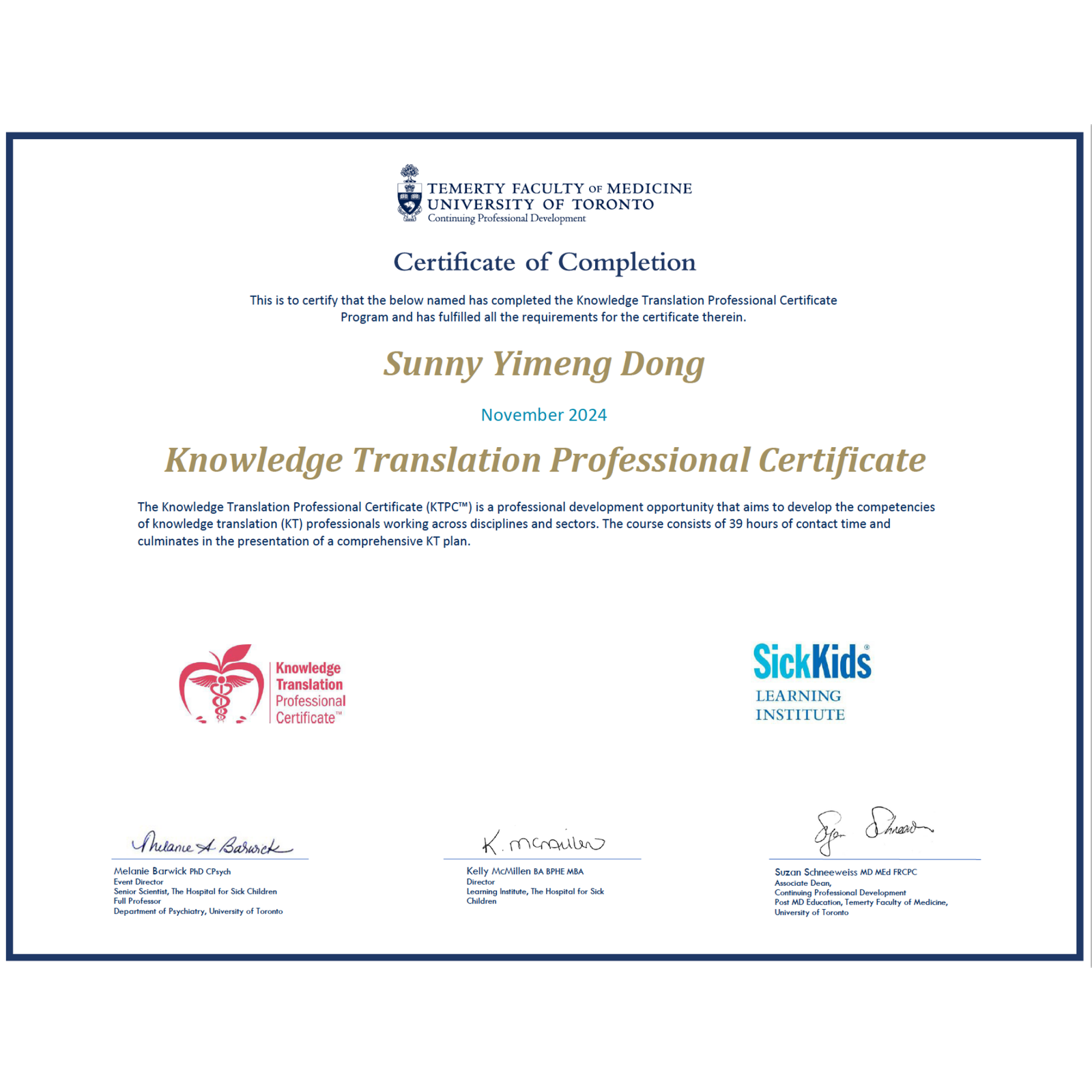
Sunny Yimeng Dong is a visual alchemist who turns complex ideas into easy-to-digest mind maps, graphics and interactive websites. She studied health sciences at McMaster University and spent 5 years in research and knowledge translation roles before starting her sole-proprietorship. Today she works with researchers, clinicians and organizations, bringing the eye of an illustrator, the mind of a health researcher and the heart of a contemplative to every project.
Email: design@curiousunny.com